• I’ve been married long enough to know there are mysteries in this world a man is never going to solve. The Bermuda Triangle, why socks disappear in the dryer, and why, despite every effort, my wife’s mission in life is to keep the kitchen island clear of stuff—so she can stack her own things on it.

    Now, I grew up with a table in the middle of the kitchen. It was for eating, doing homework, playing cards, and shelling beans when the crop came in.

    But somewhere along the way, home designers invented the “kitchen island,” which is a table that pretends it’s fancier because it doesn’t come with chairs or legs. It just sits there, proud as a mule in a parade, saying, “Look at me—I’m important!”

    And boy, does it attract clutter. At least my clutter.

    I’ll come home and set down my keys, wallet, pocketknife, the mail, maybe my glasses, and valise. You know—life’s essentials.

    Within an hour, they’ve become suspects in a police lineup, and my wife is there as judge and jury.

    “Does this belong here?” she’ll ask, lifting my hat with two fingers like it might be contagious.

    “Well,” I’ll say, “I thought so when I put it there.”

    “Wrong answer,” she declares, and my things vanish faster than donuts at a church social.

    I don’t know where she takes them, but I spend half my life wandering the house like an archaeologist trying to rediscover my own possessions. The irony is—and this is where the mystery comes in—while my things are forbidden to land on the sacred island, hers are honored guests.

    Two canvas bags from the grocery store, loaded not with edible, but books, aprons, hats, water bottles, and other odds and ends for her work. My favorite is the cellphone and iPad, thwarting my attempt to make the perfect Dagwood sandwich.

    Then there’s the basket. It’s Mary’s camouflage trick, as anything can go in the basket: coupons, receipts, notes, the dog’s vaccination records, my keys, wallet, knife, and cellphone. It’s a nesting ground for paper, and when I suggest maybe moving it somewhere else, she looks at me like I just questioned the value of indoor plumbing.

    “Where else would it go?” she asks.

    I don’t answer because I’m not stupid.

    See, a husband learns over time that marriage isn’t about winning battles—it’s about picking which ones are worth fighting.

    And the kitchen island? That’s a losing war.

    You can’t win. Best case, you get a truce.

    So I’ve adapted. I keep a decoy pile—something harmless like a magazine or an empty envelope.

    That way, she can swoop in, clear it off, and feel victorious, while I sneak my real stuff over to the dinner table, which has become my unofficial island annex. It’s not ideal, but at least I know where my keys are.

    Sometimes I tease her about it. I’ll say, “Honey, why don’t we just rename it the Museum of Stuff You’re Allowed to Keep?” She doesn’t laugh as much as I do.

    But here’s the truth: I love that she cares. She wants the house to look nice, and the island is her staging ground for order.

    Without her, this place would be a stockyard. And though I grumble when I can’t find my reading glasses, I know she’s only trying to keep chaos at bay.

    Besides, marriage works best when you accept that quirks come with the package. We’ve got a rhythm—like a dance. Sometimes Mary leads, sometimes I step on her toes, but we keep moving together.

    So yes, the island may never truly be mine. But that’s okay.

    I get the garage, she gets the kitchen, and we both get to laugh about it. Which, when you think about it, is the best treaty two people can make.

    Now, if you’ll excuse me, I need to find my wallet. Last time I saw it, it was on the island—right before the cleanup crew arrived.
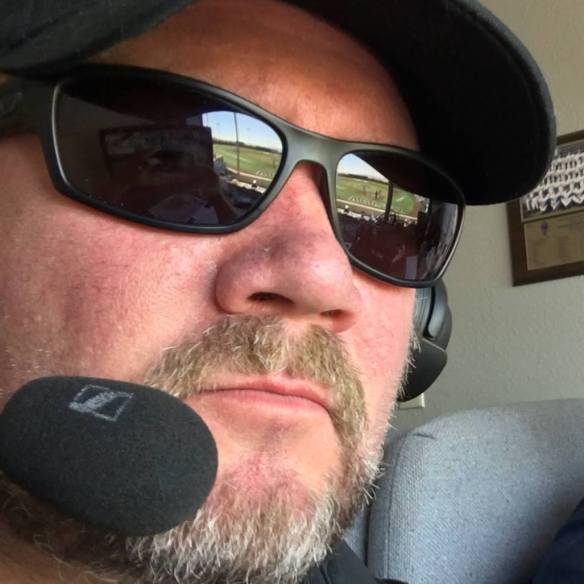
  • Now, I’ve ain’t ever been accused of being the sharpest hoe in the shed, but I’ll say this much: when you go nearly two weeks without the medication that’s supposed to keep your brain wired together, life starts looking like one of those psychedelic light shows from the sixties.

    That’s where I found myself this morning—my head humming like a lava lamp with a mind of its own, spraying neon graffiti across what I call “unorganized ground clouds.” For those of you who’ve never experienced that particular phenomenon, imagine trying to herd tumbleweeds in a windstorm while juggling bowling pins.

    That’s about the size of it.

    Now, I’d like to say I took this in stride, that I leaned back in my easy chair, sipped my coffee, and chuckled about the quirks of the human condition.

    But I just sat there muttering, “Damn the VA anyway.”

    Because let’s be honest, dealing with them can feel like playing fetch with a dog that won’t bring the stick back. You throw your request out there, wait and wait, and when something finally comes back, it usually ain’t what you asked for in the first place.

    In the meantime, I’ve had to find my own ways of keeping grounded. Coffee helps some, though too much makes the graffiti brighter.

    Walking Buddy helps more. He doesn’t care if my thoughts are marching in straight lines or zig-zagging like drunks leaving a honky-tonk—he just wants to sniff fence posts and chase grasshoppers.

    The funny thing is, mania has its moments. I found myself reorganizing the garage at three a.m. By “reorganizing,” I mean I moved everything from one side to the other and declared it progress.

    Mary came out with that look in her eye that could stop a stampede.

    “Go to bed,” she said. “The lawnmower doesn’t care if it’s parked north or south.”

    Common sense, plain as day. She’s good at reminding me of it.

    Now, folks who’ve never had their head go supernova like this might think it sounds scary. Truth is, it’s more annoying than terrifying.

    It’s like being stuck at a county fair where every ride runs at once, and you’ve got a ticket for all of them. You keep getting in line, hopping on, and by the time you stagger off one, the next one’s ready to launch you.

    I keep telling myself it’ll pass once the VA finally gets around to filling the prescription. Until then, I reckon the trick is not to fight it too hard. Life throws its curves, and sometimes the best you can do is lean back, laugh when you can, and try not to spill your coffee when the merry-go-round spins too fast.

    And maybe that’s a blessing in disguise: even when my head’s a carnival midway, I know I’m still here, still breathing, still capable of taking Buddy for a walk, fixing a sandwich, and sitting on the porch to watch the clouds. Organized or not, they keep drifting by.

    So, yes, damn the VA anyway. But thank heaven for dogs, wives with common sense, and the kind of small-town life where even a lava-lamp brain can find a little peace.

  • Had to make a quick run down to Las Vegas the other day. Nothing glamorous about it—no poker chips, no sequined showgirls, no Elvis impersonators waiting with a guitar. Just me, an empty stomach, and the promise of some heavy equipment that needed hauling back north.

    Now, it’s one thing to go to Vegas in spring, when the breeze feels like a warm hug from your grandma’s afghan. But in August, stepping onto the Strip is more like opening an oven door and climbing inside to look for lost change. I swear the air shimmered like it was trying to dance away from the sidewalk, and I had to check my shoes to make sure the soles weren’t melting.

    When I walked into the hotel lobby to sign some paperwork, I must’ve looked like a roasted turkey that had just come out of the pan. The young lady at the front desk, smiling as fresh as an ice cube in lemonade, says, “Don’t worry, sir—it’s a dry heat.”

    Now, I don’t know who first came up with that phrase, but I’ve heard it more times than I’ve had hot dinners. Every time I do, I have to laugh.

    So, I looked her square in the eye, sweat dripping off my chin, and said, “Ma’am, so is the electric chair, but I’m not volunteering for that either.”

    She froze for a second, then let out a laugh that echoed all the way down the marble hallway. I reckon nobody had ever answered her quite like that before.

    Truth is, “dry heat” is one of those little half-truths people use to make misery sound reasonable. They say it like it’s supposed to make you feel better, like you’ll suddenly stop sweating through your shirt and your tongue will unstick from the roof of your mouth. That’s the same logic my Uncle Kenny used when he said, “Sure, the dog bit you, but at least he didn’t have fleas.” Comforting words, but not really a solution.

    Las Vegas heat is a sly sort of thing; it doesn’t hit you with the wet slap of a Louisiana summer, where the air feels like soup and you need a snorkel to mow the lawn. No, Vegas heat bakes you quietly, like a forgotten potato at the back of the grill.

    You don’t notice it at first, and then suddenly you’re cooked clear through.

    I kept thinking about my granddad, who used to say, “Heat like this makes a man consider the benefits of being a lizard.”

    He had a point. Lizards don’t worry about mortgages, gas prices, or how their hat makes their heads sweat. They soak up the sun, blink now and then, and call it a good day. Meanwhile, there I was standing on blacktop hot enough to fry eggs, wondering if anyone would notice if I flopped down belly-first and gave it a try.

    By the time I loaded up the equipment, the thermometer on the bank sign read 111. My water bottle was the same temperature as my coffee had been that morning, which wasn’t very refreshing.

    I muttered to myself, “Dry heat, my foot,” and pointed the truck north, chasing the mirage of mountains.

    But I’ll tell you what—when I got back home and stepped out into our own 90-degree weather, I thought I was in a spring meadow. I nearly had to grab a sweater. That’s the gift Vegas heat gives you: it makes the merely hot feel heavenly.

    So, next time someone tries to console me with that “dry heat” business, I’ll smile and nod politely. But deep down, I’ll remember standing there on the Strip, sweat rolling down my back, and I’ll hear my own voice again, “So is the electric chair.”

    Because sometimes, common sense is the only fan you’ve got in the desert.

  • It was around 2010 when Bryan Samudio and I lost touch. Social media was the Wild West back then, too, before people knew what a “block” or “unfriend” could do to a fellow’s feelings.
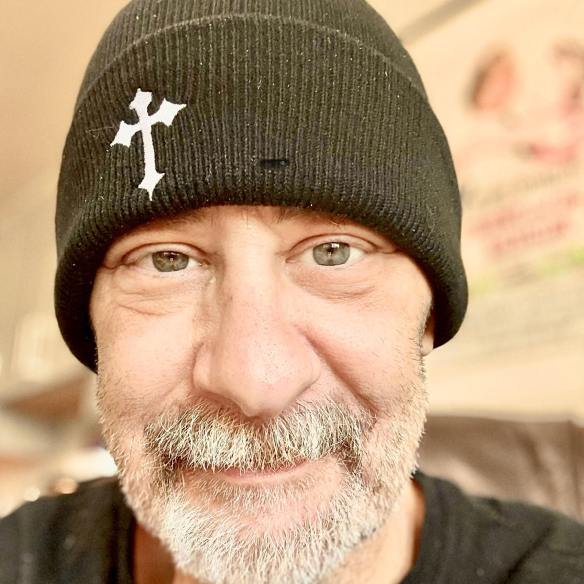
    Bryan decided my Conservatism wasn’t his flavor of conversation, and—poof—our digital friendship got benched. He even had “liberal” on his profile, so I wasn’t surprised when he made the call. Still, it stung. I liked the guy.

    Fast forward to this week, and I find myself bummed in a way no “unfriending” could prepare me for. Bryan Samudio—the Hall of Fame journalist, the face of Northern Nevada sports for thirty years—passed away unexpectedly.

    Fifty-two years old. That’s not a long life, it’s a life cut short in the middle of its season.

    Bryan was one of the guys you could turn on the TV and trust. He wasn’t flashy, though he could tell a story with the same drama as a bottom-of-the-ninth home run.

    He didn’t have to shout or strut—he had the goods. A graduate of UNR’s Reynolds School of Journalism, he spent more than a quarter-century covering sports across Nevada.

    From Wolf Pack basketball to the 49ers, from the PGA to the world land speed record out on the Black Rock Desert—Bryan was there with his microphone, his grin, and his knack for finding the human side of the game. I admired that about him.

    He could report on a Super Bowl one day and turn around the next to cover Tonopah’s Clown Motel or the Nevada Legislature, and it all came out with the same respect and warmth. That’s a skill—not just in journalism, but in life.

    When I read that Bryan co-founded Nevada Sports Net, hosted Wolf Pack All Access, and even took home a Telly Award for a documentary, I wasn’t surprised. He always struck me as a guy who could spin a half-empty gymnasium into something you wanted to sit down and watch.

    He retired in 2021, the most seasoned sportscaster in Reno at the time, and traded the press pass for service at the Washoe County Sheriff’s Office. That, too, was Bryan—still serving, just in a different uniform.

    It’s funny how life gives us these characters who play a part in our story—sometimes just a tiny role, sometimes a big one. And then suddenly, their game clock hits zero, and we’re left holding our memories.

    In Bryan’s case, he cared about people, and his features weren’t about stats and scores; they were about heart. A kid who fought his way back from an injury, a coach who doubled as a father figure, and a community that found its identity in a team.

    I’ll be honest with you–I wish we hadn’t lost touch. I wish we had one more conversation, maybe even an argument.

    There’s value in sparring with someone you respect—it keeps you sharp. But life has a way of shuffling the deck whether you like it or not.

    Bryan’s passing reminds me that people are not guaranteed innings. They can be here one day, cracking jokes about a blown call, and gone the next. And when they go, what lingers is not their résumé or awards but the way they made you feel—trusted, entertained, maybe even inspired.

    So here’s to Bryan Samudio, Hall of Fame journalist, master storyteller, sports fan extraordinaire. I picture him now in some press box above, leaning into the mic, voice steady, eyes twinkling, ready to call the next great play.

    And me? I’ll be in the cheap seats, nodding along, grateful I got to know the man—even if only for a while, because in the end, life’s not about who unfriended you. It’s about the folks who made your world a little richer just by being in it.

  • Now, I’ve always said the best family stories aren’t the ones that come from big, planned adventures—they’re the little moments that sneak up on you while you’re just sittin’ around talking. That’s what happened the other weekend up at Lake Tahoe.

    My wife’s brother, Steve, and part of his family were in town visiting the lake. Since we live less than an hour away, Steve invited us up to spend a little time with them. Tahoe in summer is one of those postcard-perfect places—pine-scented air, blue water sparkling like a jar of marbles in the sun, and just enough tourists to make you feel like you’re on vacation without having to pay hotel rates.

    We found ourselves gathered in the rental cabin’s cozy living room, the kind of place where mismatched couches and a coffee table covered with travel brochures make you feel right at home. Mary was sitting catty-corner from her brother, and pretty soon they got to reminiscing about the good old days.

    Now, if you know Mary and Steve, you know they’ve got a shared history of small-town California memories that could fill a book—and about half of those memories involve food. Sure enough, the conversation drifted to Farrell’s Ice Cream Parlor, a legendary spot from their childhood.

    You could almost hear the tinny honk of the Farrells’ kazoos and smell the waffle cones just from the way they described it. Steve leaned back in his chair with a grin and said, “Oh yeah, my favorite thing there was the Cat on a Hot Roof Sundae.”

    The room got quiet for a beat—just enough time for everyone’s brain to try and make sense of what he’d just said—then it was like someone opened the floodgates of laughter.

    Mary shook her head, grinning ear to ear. “Don’t you mean the Tin Roof Sundae?” she asked.

    Steve blinked. “No, no, I’m pretty sure it was the Cat on a Hot Roof Sundae.”

    That sent the laughter up another notch. “Steve,” Mary said, trying to catch her breath, “Cat on a Hot Tin Roof is the name of a movie. Tennessee Williams. Elizabeth Taylor. Paul Newman.”

    Steve gave this slow, squinting look that said he was thinking it over, then shrugged. “Huh. I always thought it was the other way around.”

    Without missing a beat, he added, “Well, if it was the Cat on a Hot Roof Sundae, I bet it’d be served by Maggie Pollitt.”

    Now, that just about did us all in. I’m not sure if it was the image of Elizabeth Taylor wearing a waitress apron or the way Steve delivered the line with the calm certainty of someone explaining how to fix a lawnmower. We laughed so hard that I thought the cabin might tip off its foundation.

    It got me thinking later, maybe Steve was onto something. A Cat on a Hot Roof Sundae could be a hit. Picture this: a scoop of vanilla for the “roof,” drizzled with caramel “sunshine,” maybe some cinnamon heat sprinkled on top for that “hot” effect. You could even add a couple of little chocolate chips in for good measure.

    Sure, it might not win a Pulitzer, but it’d draw a crowd.

    That’s the thing about family visits—you go in expecting a pleasant afternoon and come out with a story you’ll be telling for years. We didn’t plan on creating a new dessert or rewriting Tennessee Williams, but here we are.

    As we left that evening, the sun dipping behind the Sierra Nevada, I could still hear Steve’s voice in my head. And I couldn’t help but smile, thinking how lucky we are to have people in our lives who can take an ordinary conversation about ice cream and turn it into something worth retelling.

    Sometimes the sweetest part of the day isn’t the dessert itself—it’s the laughter that comes with it. And if you’re lucky, it’s served up by your own family, no menu required.

  • Back in 1967, in our living room with green shag carpet and a rabbit-eared RCA the size of a washing machine, we didn’t have a television remote control. We had me, and I was state-of-the-art.

    Whenever Dad wanted to watch something different—and mind you, there were only three channels and half the time one was showing a test pattern—he’d holler, “Change it to Channel 6,” and there I went, dutiful as a church usher, click-clack-clicking the mechanical dial like I was decoding a safe.

    If I close my eyes, I can still hear that CHUNK CHUNK CHUNK sound as the tuner moved from one station to the next. The dial had authority.

    None of the silent, infrared button-mashing nonsense. Nope, you felt it when you changed the channel.

    Your fingers had to work for it—turning that big chrome knob that took both dexterity and a bit of elbow grease. You’d hear a little buzz as the vacuum tubes adjusted themselves like they were waking up from a nap.

    And God help you if you turned it too fast—you’d get a scolding about “wearin’ the thing out” like you were driving the TV too hard.

    It wasn’t just changing channels either. Volume? That was me, too.

    “A little louder!” Dad would say, usually once settled with a cup of coffee and the sports section of the Times-Standard. I’d twist the knob just a touch.

    “Too much!” he’d snap. “Back it off!” I’d inch it back like I was cracking a safe. I tell you, remote controls didn’t have anything on my finesse.

    And don’t get me started on fine-tuning. That was an art form.

    Sometimes the picture would get all wiggly, as if trying to do the hula hoop. That’s when I’d have to adjust the horizontal hold, vertical hold, or my favorite percussive adjustment, which is to say, a sharp whack on the side of the set. Not too hard—you didn’t want to anger it, just enough to jog the vacuum tubes back into alignment.

    If things got super fuzzy, you’d have to mess with the antenna. Ours had a coat hanger jammed in it, and a wad of tinfoil that made it look like we were trying to pick up signals from Sputnik.

    Someone—usually me—would stand on one foot, lean slightly left, hold the antenna in the air, and not move. I’d be frozen there like a living lightning rod until Dad said, “Perfect! Now don’t move!”

    I’d hold that pose for the entire Ed Sullivan Show while my left foot went numb.

    But you know what? I didn’t mind.

    We thought it was normal. Nobody complained about not having a remote—we didn’t know what we were missing.

    Years later, when I finally saw one of those early remote controls—a Zenith Space Command from the 60s—I laughed out loud. It looked like a garage door opener and sounded like a dog whistle.

    Sure, it could change the channel, but could it understand when Dad said, “Go back, not that far, just one click”? Could it sense the exact volume level Mom liked during As the World Turns?

    Nope. It didn’t have the heart, the intuition, or the uncoordinated grace of a seven-year-old boy on Saturday night duty. So yeah, I’ve got a rare photo of a 1967 television remote control.

    It’s me, and I was cordless, voice-activated, highly responsive, and only needed the occasional sandwich to recharge.

  • I met Dave Mencarelli years ago. Back then, we orbited each other like two mismatched moons, each circling our own little radio station planet. I was over on my patch of airwaves, he was on his, and we didn’t cross paths until KUEZ happened.

    Now, radio people are like cats—most of us prefer our corners, coffee mugs, and brand of “don’t mess with my equipment.” But when we found ourselves sharing the same workplace, we struck up one of those friendships that made sense without any ceremony.

    One of the first things we talked about—before playlists, before deadlines, before even where to find the best tacos in town—was the fact that this radio station was, to put it kindly, “active.” Not just with an occasional raccoon in the dumpster, but active.

    Strange bangs from the empty hallway, random thumps from the ceiling, the kind of garbled whispers that make you check to see if your headphones are attached to the board.

    And it wasn’t just us. Our dogs—on separate occasions, mind you—reacted to something invisible in the same spot, right there in the doorway outside the control room. Mine bristled and growled. Dave’s pup cowered like somebody just told him Santa wasn’t real.

    Now, Dave, besides being a solid radio man, had a side gig that didn’t just pay the bills—it fed his soul. He was a stand-up comic.

    And not just “tell a joke at the bar,” amusing. He was funny, and that got him booked at the Laugh Factory—whichever one in the country had a microphone and a spotlight at the time.

    And here’s the thing about funny people—they know life’s short. They understand the laugh is worth more than the applause. And they know a good joke can live a lot longer than the teller.

    Dave knew his time was running short. Diabetes is a cruel dance partner, and it was stepping on his toes for a while. One day, he told me, plain as you please, “If you don’t joke about my passing when the time comes, then we weren’t the friends we thought we were.”

    I laughed. Because that’s the kind of thing Dave’d say—half challenge, half invitation.

    Well, today, a couple of hours ago, that time came. Dave slipped away, and the world got a little quieter, or at least the part of it that laughed hardest at his punchlines. I went straight to his social media page and wrote, “Bless you, Dave. I will miss you. Visit when you can.”

    And I meant that last part. Because if there’s anybody likely to take a curtain call from the other side, it’s Dave Mencarelli.

    I can picture it now—me sitting in the control room some bleary morning, nursing my coffee, running through the morning lineup, and—BANG!—something drops in the hallway. Then a whisper, low and scratchy, in my headphones.

    Maybe even the faint smell of the cologne he wore when he thought he might meet somebody important. I’ll spill my coffee, curse his name, and then laugh until my heart hurts.

    You see, I believe friends stick around in one way or another. Some stay in your head, some in your heart, and a rare few find a way to mess with your lights and your dog just to let you know they’re still in the room.

    Dave was one of those rare few. He lived wide and loud, but never mean. He had a way of making you feel like you were in on the joke—even if you were the punchline. And he carried that same light into dark places, whether it was a dingy comedy club or a haunted radio station hallway.

    I figure when the time comes for me to shuffle off this mortal coil, Dave will be waiting. Probably leaning against some cosmic mic stand, saying, “Took you long enough. Hope you brought material.”

    Until then, I’m keeping an ear out. The station’s quiet now, but that’s just the thing about ghosts—they don’t punch a clock. Sooner or later, Dave’ll find his way back to give me that scare he promised.

    And when he does, I’ll shake my head, smile, and say, “Good to see you, Dave. You still owe me coffee.”

    Because life, like friendship doesn’t end, sometimes, it just changes its frequency.

  • Some things in life make you stop, shake your head, and whisper a thank-you under your breath. For me, it was reading about the man who died out at Burning Man this past Saturday.

    Now, I’ve been to that dustbowl gathering a handful of times, mostly out of curiosity and partly because I enjoy volunteering. It’s a peculiar mix of Woodstock, Mad Max, and a county fair with fewer pies and more glitter. You’ve got fire-breathing dragons on wheels, art installations the size of barns, and people wearing nothing but body paint—sometimes the body paint’s optional.

    This year, I went the weekend before to put in my volunteer hours. Handed out maps, pointed folks toward the porta-potties, and even helped a fellow who swore his tent got stolen.

    Turned out he was standing right next to it. I figure the desert sun fries more brains than tequila ever could.

    So when I read the news about someone being found dead—right there as the wooden effigy got set ablaze—I thought, “Well, Lord, I dodged that dust storm.”

    Not that I’m scared of much, but a homicide scene ain’t the kind of festival attraction you circle on your program.

    Burning Man, for all its slogans about radical inclusion and communal effort, still happens on Earth, where human beings are human beings. And human beings, bless us all, are capable of everything from painting the Mona Lisa to leaving a shopping cart right in the middle of a parking space. That’s why I’ve always kept one eye on the art and the other on my surroundings.

    The sheriff’s office said the man’s identity ain’t known yet. That’s the saddest part of all.

    Somewhere there might be a mother, a sister, or a friend still waiting on a text that’ll never come. Festivals can make us feel untethered from the world, like we’re in some temporary city floating above the rules of gravity and grief.

    But news like this yanks us back down fast.

    I’ll admit, I grinned a little when I read the official statement about resources available–WiFi, Rangers, Crisis Support. Imagine that—checking the WiFi at Burning Man.

    Once upon a time, the only signal you could count on was a dusty hand wave from across the playa. Now, even in the middle of nowhere, we can still post a selfie before asking for a Band-Aid.

    But I don’t make fun too hard. People need connection.

    Whether it’s a ranger in a khaki shirt with a walkie-talkie or a stranger handing you an extra bottle of water, the desert runs on kindness. That’s what I keep from my volunteering days–the simple truth that most folks want to help, even if their costumes suggest otherwise.

    I think back to the man whose tent “disappeared.” When we finally convinced him it was, in fact, his own tent, he hugged me like I’d returned a lost dog. No crime scene tape, no deputies with notepads—just a man relieved to have his little piece of shade back.

    Maybe that’s the contrast life keeps showing us–one person laughs over a tent, another lies down and doesn’t get up again. And we, the rest of us, go on—trying to squeeze sense out of the madness.

    So yes, I’m glad I went last weekend. I got to leave with dust in my boots, alkali on my shirt, and a head full of stories. And I didn’t have to see flashing red lights or yellow tape cut across the desert night.

    Life’s short enough as it is. If you’re going to volunteer, dance, or wander out where the playa meets the stars, do it with your whole heart. And for heaven’s sake, keep an eye on each other.

    That’s the real burn—sticking around long enough to keep the stories going.

  • I once heard someone say that everybody has one bad month that rolls around each year like clockwork. The idea is, no matter how you try, that month gets you—old hurts, hard memories, or things that keep going wrong.

    For me, if I ever believed such a thing, it would be September.

    It starts with my sister Deirdre’s birthday on the 3rd—nothing bad there, except it reminds me how fast time slips away. Then there’s September 9th, when my stepdad, Delmar, passed on. The very next day is my mom’s birthday.

    If she were still with us, I’d probably hear her voice calling her and me “the aught babies” of the family—born in years ending in “aught” or zero and proud of it.

    Then comes September 11th, and that one packs a wallop. Like everyone else, I remember where I was when the towers fell.

    But for me, that day also carried three other weights. I worked 12 hours in the newsroom, knowing that when I clocked out, I had nowhere to go—Mary and I had separated the night before.

    The images of dust clouds rolling down New York streets yanked me straight back to Beirut, 1983, and the panic attack that followed nearly flattened me. In the early morning hours of the 12th, hollowed out, I made a choice I’m grateful every day didn’t end the way I thought it might.

    And then, as if September hadn’t already stacked the deck, the 24th rolls in—my mom and dad’s wedding anniversary. Married in Reno, Nevada, in 1956, before shipping off to France.

    Given all of that, it’s clear why I believed in the “bad month” theory. September was the yard sale of my sad memories, all spread out on the lawn at once.

    But this year, I’m doing it differently. I’ve decided to unsubscribe.

    I don’t mean just mentally saying, Oh, September isn’t that bad. I mean actively refusing to let a month tell me how I feel. It’s a bit like telling the weatherman you’re going to have a sunny day even if he swears there’s rain coming. Sure, the sky might be gray, but you can still make soup, put on a favorite record, and call an old friend.

    Here’s the truth: those hard days happened, and nothing I do will erase them. But I’ve realized something—it’s not September’s fault. September’s just a collection of days.

    It’s not out to get me. My grief, my memories, my aches—they’re mine, and they’re part of my life no matter what the calendar says.

    So I’m reclaiming the month. This year, on Deirdre’s birthday, I’m sending her something that’ll make her laugh—a ridiculous gag gift she’ll probably keep out of pity.

    On the 9th, I’ll raise a toast to Delmar with his favorite soda drink, the one that is pure sugar but tasted like heaven to him. The next day, I’ll bake a cake for my mom, sing “Happy Birthday” to her picture, even if Buddy-dog gives me that look that says, “You’ve lost it, old man.”

    As for September 11th, I’ll remember the lives lost and the strength found, but I’ll also make sure to sit quietly and breathe. No panic this time. Just steady breathing and a cup of coffee in the morning sun.

    And the 24th? I’m thinking a trip to Reno might be in order—not for a quick wedding, mind you, but to tip my hat to the place where my folks began their long and winding adventure. I’ll stand in front of the courthouse, and imagine them racing down the steps and turning north to the Mapes for their one-night honeymoon.

    Some people let certain months own them, like a landlord collecting rent on their mood. I’ve decided September’s not getting my rent check anymore. It can sit there with its stack of old memories, but I’m bringing new ones to the table—ones full of laughter, cake, and maybe even a road trip or two.

    After all, the calendar may roll around the same way every year, but I don’t have to. I can turn the page any time I want.

    And this September, I’m turning it with a smile.

  • There are some things in life you can prepare for, and some things you just can’t. A high school reunion is one of those you try to prepare for.

    You think about what shirt doesn’t show your belly too much, whether your old letterman jacket still fits, mine doesn’t, and which stories you’ll tell without sounding like you’re bragging or embellishing. Then, there are the names. Ah, yes—the list of classmates who won’t be there because they’ve gone on ahead.

    Now, I don’t take this list lightly. I sit down, pen in hand, and treat it like I’m writing a sacred roll call.

    Every name is a memory. Each one is a piece of my own life.

    And each time I jot one down, I pause for a second and think about them—who they were, what we did together, what goofy thing they said or did, that still makes me grin.

    So, imagine me today, cross-checking notes, when I find out I’ve been mourning the “death” of Peggy Sanderson for nearly a decade—only to discover Peggy is not dead at all.

    Nope. Peggy’s alive, kicking, and, for all I know, probably baking casseroles or teaching her grandkids how to ride a bike.

    At first, I thought, Well, ain’t that something? Then I thought, “Wait a second—if Peggy’s alive, then who in the world have I been praying for all these years?”

    I had this picture in my head of her passing in 2016. I even remembered telling someone, “Such a shame, Peggy was always the one who could turn detention into a comedy routine.”

    Turns out I might’ve been confusing her with another Peggy, or maybe my brain just got sloppy filing memories away. Whatever the case, when the news hit me, I felt this odd cocktail of emotions–relief, confusion, and a pinch of embarrassment.

    I mean, what do you do when you find out you’ve been wrong about someone’s death? Send them a card?

    “Dear Peggy, congratulations on being alive. You had us worried there for a minute.”

    The thing is, death and life have a funny way of making us stop in our tracks. Most of us spend time trying not to think too hard about either one.

    But then you get news like this, and suddenly you realize what a gift it is to know someone’s still out there, breathing and laughing. Maybe even making mistakes and trying again tomorrow.

    I chuckled while imagining me, walking in, spotting Peggy across the room, and blurting out, “You look great—for a dead woman!”

    That’d get me a slap or at least a raised eyebrow, but the truth is, I’d still give her the biggest bear hug she ever had and thank God for second chances—second chances to tell her she mattered, that she made high school a brighter place, that the world’s a little warmer because she’s still here. You see, it’s not really about whether we’ve got the list right.

    The list isn’t the thing. It’s about remembering the people we shared a chapter of life with.

    Sometimes we goof, but the heart behind it is what counts. And if you’re lucky enough to find out someone you thought was gone is still here, well, that’s about as good as it gets.

    So, Peggy, if you’re reading this, forgive me for laying flowers on your memory before your time. I’m not sorry I thought of you, though. In fact, I think I’ll keep on thinking of you—and all of us—as still here, still part of each other’s story, even when we eventually do cross over to the other side.

    And when I walk into that reunion, I’ll be glad to know that not only will there be old friends, there’ll also be a few joyful surprises—like Peggy, alive and well, reminding me that sometimes the best news is the news you never saw coming.