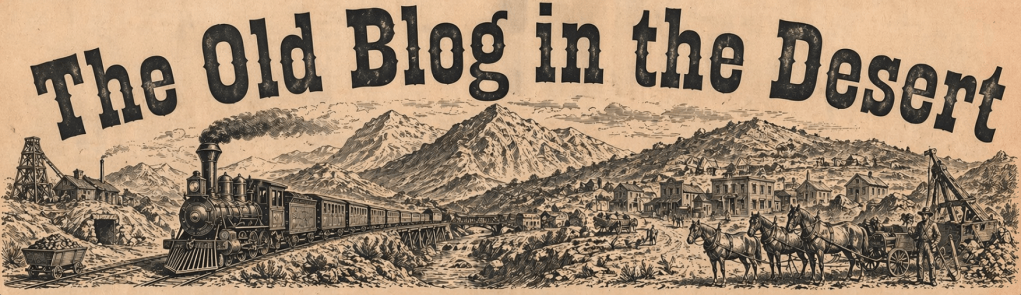
• Mining in Del Norte

    Del Norte County yielded several types of metal to miners who worked here more than 100 years ago. Gold mining began in 1851, and by the late 1800s remained one of the “most important” of its industries, according to A.J. Bledsoe, who published a history of the area in 1881.

    By that date, Bledsoe included placer diggings on Smith River and the Klamath along with the off-and-on efforts to mine the black sands at the foot of Gold Bluffs, south of the mouth of the Klamath River. Although considerable money had been invested at Happy Camp, Bledsoe wrote that it remained the only section of the county not yet to receive any capital benefit.

    At the time he published his history, Bledsoe said the most important mine in the Happy Camp District was Del Norte Hydraulic Mining Company’s. Its diggings were a mile above the town.

    But four other mines and various river bar claims also dotted the area. The gold mining areas of Big Flat, Haynes Flat and French Hill were worked since about 1854.

    Miners worked the Smith River with placer mining methods, but did not find large amounts of gold, so when the beach sands of Gold Bluff began drawing notice the miners paid great attention. Other gold-bearing sands were found at Humboldt Bay, Klamath River and Crescent City, but Gold Bluff became the most consistently mined for about 20 years.

    Gold was not the only metal mined, however. Silver, copper, chrome, iron and coal also drew investors.

    Silver was not found in a specific area but rather in ledges throughout the county. Copper was localized around Low Divide in the north-west part of the county, in the vicinity of the chrome-bearing ores. Low Divide also contained “enormous” amounts of iron ore of various grades.

    Although coal was discovered at Point St. George, Bledsoe noted that “like every other mining company, with the exception of the Tyson company, the coal company was destitute of capital.” It sank a shaft about 70-80 feet, but was told to suspend work by its creditors.

    Bledsoe described the coal as brown and of valuable properties. Copper mining in Del Norte County had a 20-year run before the industry went belly up.

  • Cultivating the Klamath

    After the Klamath Reservation was occupied by members of the Tolowa tribe during the late 1850s, the Office of Indian Affairs took action against several of its staffers, citing them with wrongdoing. The first to go was Subagent J.P. Heintzelman.

    Indian Superintendent Thomas J. Henley had determined that the movement of the tribe to Klamath was “premature” and had sparked the conspiracy that ended in the fight on Wau-Kell Flat. His successor was David Buell, who took charge of the reservation in 1858.

    Along with the subagent in charge, the agency staff included a physician, farmer, blacksmith, interpreter, overseer and teacher. All but one of the positions was at Wau-Kell, with overseer stationed at Kepel.

    Henley resigned under fire, for reasons not made clear, in 1859, and was succeeded as Superintendent of the California District by James Y. McDuffie, who had visited the area. McDuffie realized that the setting was in a beautiful valley of 800 acres that was fertile and well-adapted to a variety of grain and vegetables.

    About 160 acres were under cultivation, which McDuffie felt “spoke well” for the industry, management of the agency and employees, and promised great success. And about a mile below the agency, on the opposite side of the Klamath River, was a 40-acre farm as well as to another 80 acres of land adjacent to it.

    McDuffie also had visited an 18-acre farm about 10 miles away at Pecwan. It adjoined 50 acres he felt could be profitable.

    Also in its favor were surroundings “unsurpassed for grazing purposes” and protected from “the invasion” of white settlers, and near other acreage that could be cultivated. He figured it could support upwards of 5,000 Native Americans.

    Based on his favorable impression on the Klamath, McDuffie pitched his desire to have the Tolowa become a self-sufficient farming commune. John A. Dreibelbis, incoming head of the Northern District of the California Superintendency, toured the area 1860.

    After President Abraham Lincoln took office in 1861, George M. Hanson replaced Dreibelbis. He was not as optimistic as his predecessor until he visited the area and saw the 300 acres of crops and 600 more acres that could be cultivated.

    He decided that although the agency buildings were in “tolerable” condition, money was needed to buy younger working animals and better farm equipment. That funding would be delayed because of the Civil War.

  • Another Nevada Democrat, Free Speech and a Twist

    It was October 10, 2007 when Nevada Senator Harry Reid took to the senate floor and assailed Rush Limbaugh over comments he made regarding phony soldiers. Reid had his facts wrong saying Limbaugh had called members of the military “phony soldiers.”

    What Limbaugh actually said was in response to a caller, who stated: “And what’s really funny is they never talk to real soldiers. They pull these soldiers that come up out of the blue and spout to the media.”

    Limbaugh: “The phony soldiers.”

    The talk show host was speaking of a man who had identified himself as a soldier while speaking on camera to reporters, and was later found to have never served in the U.S. Armed Forces. Thus, a phony soldier.

    Reid when so far as to write a letter of complaint on Senate stationery, signed by 40 other Democratic senators including Hillary Clinton and Barack Obama, to Clear Channel’s Mark Mays, urging him to condemn Limbaugh’s remark. Mays refused and gave the letter to Limbaugh.

    Limbaugh, then put the letter up for sale on eBay and gave all the proceeds to the Marine Corps-Law Enforcement Foundation, which provides scholarships to children of slain Marines and police. In the end Limbaugh wasn’t intimidated and he raised $2.1 million for a good cause.

    Now comes Nevada’s U.S. Congresswoman Shelley Berkley whose launching a petition to pull the Rush Limbaugh show off the air. Her action comes after he called Georgetown University law  student Sandra Fluke a “slut” and a “prostitute” on his radio show.

    The petition on the Shelley Berkley for Senate website calls on Clear Channel’s CEO Bob Pittman to stop giving Limbaugh “a national megaphone” for what she calls “hateful attacks against women.”  The congresswoman also accuses her Nevada Senate race opponent, Republican Senator Dean Heller, of being Limbaugh’s water boy, after Heller declined to sign her petition.

    Of course this sort of nasty political rhetoric isn’t all that strange — that is until you add that certain Nevada twist to it.

    “He said some bad things about prostitutes which we’re not happy with,” said Moonlite Bunny Ranch Owner, Dennis Hof, speaking to KRNV-TV’s Brooke Boone.

    Nevada is the only U.S. state to allow legal prostitution, in the form of regulated brothels. The Moonlite is located in Lyon County, some six miles from Nevada’s capital of Carson City.

    Hof adds, “We’re going to let him redeem himself by being nice to legal prostitutes,” saying he’s willing to spend $1 million on advertisements.

    “Now is his chance to fix things. We think if he comes out now and supports the Bunny Ranch and real prostitutes, legal prostitution, it might make him look good,” commented Hof.

    And now, some are asking Berkley why she does not denounce comedian Bill Maher as well.  Maher has made his comedic bones out of attacking conservative women.

    Will she continue her fight to defend women if it means going up against one of her political allies or is this just election-year hypocrisy? Shelley Berkley, where do you stand on Bill Maher?” asks David Gallagher, Executive Director of the Nevada Republican Party.

    Again he was speaking to Brooke Boone of KRNV-TV in Reno.

    But Maher is working to undercut that line of questioning by those in the GOP. In a Tweet, Maher says, “Hate to defend #Rush Limbaugh but he apologized, liberals looking bad not accepting. Also hate intimidation by sponsor pullout.”

    Given the subject — I can’t help but laugh — Maher twittered “pullout…”

  • Manzanar

    It’s hard to imagine a city with 10,000 people was once located in the Owen’s Valley. Harder still to imagine — they were mostly American citizens, detained by their own government.

    Camp Manzanar was authorized following Pearl Harbor. In early 1942, President Roosevelt signed Executive Order 9066, calling for people of Japanese ancestry to be placed in relocation camps.

    Soon it had rows of barracks surrounded by barbed wire fences, eight guard towers and newly relocated residence. It eventually included an auditorium, cemetery, airport, sewage treatment plant and a hospital.

    Manzanar Historic Site is located on U.S. 395, jus’ south of Independence, California. And while not much more than an open 6,000 acre space remains of the camp, it stands as a stark reminder to a dark chapter in U.S. history.

  • Silver Tailings: Nevada’s Pop-Historian

    The first time I met the Brooklyn, New York, native Norm Nielson, I was working at KONE in Reno with Paul Stewart. Paul and I were putting together an advertising campaign using Nevada as a historical back drop.

    It was Paul’s idea and he asked me to help him gather facts and write scripts. It was also Paul’s idea to have Norm voice the ads as he was sure the man’s would carry the day.

    Norm had a voice that was a rich, baritone. It was clean, smooth and inviting and I was instantly smitten and jealous with his God-given talent.

    We had about 40 “spec-ad’s in the can” – meaning there were 40 scripts recorded and ready for whatever prospective client purchased the campaign. Unfortunately, KONE changed format from County-Western to Middle of the Road music, otherwise known as Big Band.

    Needless to say – the campaign went by the wayside and was eventually forgotten about. However the idea was resurrected in the early ‘90s when Norm, working for Nevada Bell, created “Tales of Nevada,” which was carried on at least four radio stations throughout the state.

    Of course they were voiced by Norm.

    It was early June 1997, when I learned Norm had passed away from a heart ailment. Susan Voyles with the Reno Gazette-Journal wrote about his passing like this: “But he died alone, a broken man in a Reno motel.”

    Norm made a storied exit that’s all most as legendary as his entrance to the Silver State.

    He came to northern Nevada by way of an invite of a man whose grand-father, Charles Fey invented the one-arm bandit. Marshall Fey had seen an episode of “Bonanza” where “Hoss and Little Joe” ride horse back from Lake Tahoe to Virginia City in 15 minutes.

    Marshall called Norm – who incidentally had written that particular episode – saying, “Son, you’ve never been to Nevada, have you? Come on up to Reno and I’ll buy you a drink.”

    At the time Marshal Fey owned the Liberty Belle Saloon. It once sat in front of the Reno-Sparks Convention Center, but was closed up and eventually demolished in 2006 to make room for more parking at the center.

    Norm fell in love with Nevada and remained a resident until his death. I’ve always believed that because of his love for the state – he deserves a place amid the annals of Nevada’s history.

  • Silver Tailings: The Railroad Town of Caliente

    Located jus’ north of Las Vegas on U.S. 93, Caliente started with two escaped slaves, Ike and Dow Barton, raising cattle and hay in 1860. They sold out to Charles and William Culverwell, who owned a simular operation near the mining camps of Pioche and Delamar.

    With the 1901 arrival of the Salt Lake Rail Line, the area began to shed it’s old background. That same year, streets were surveyed, a post office established and the town officially named after the area’s natural hot springs using the Spanish word for “hot.”

    It would be another four-years for regular train service to begin, however Caliente remained a home-base for workers building the route south. Eventually an engine terminal and sidetracks were built, creating employment and stablizing the town’s economy.

  • A School’s Namesake

    She was my sister, Deirdre’s God-mother and our neighbor across the street when we were growing up. She was also a teacher for nearly 34-years and the member of a Del Norte County pioneer family.

    By 1964 she had retired from teaching elementary school and when the flood raced through the town of Klamath that same year, the school, Klamath Union was renamed in her honor. Today Margaret Keating School holds classes for students from kindergarten to sixth grade.

    For years, her picture hung in the hallway between the office entrance and the nurse’s station at the school. It’s since been taken down and never replaced – which is ironic as she was a strong proponent for educating local Native American children in both the way of the “Anglo,” as she put it, and in “their own long and colorful” history.

    Born Margaret Elizabeth Morrison in 1895, she and her brother, Hadley grew up in Del Norte County, on the outskirts of Crescent City. By 1916, Margaret was a 21-year-old teacher, living in Crescent City and is even listed as a Democrat in the “Index to The Great Register of Del Norte County, California.”

    She married William Keating and moved to Klamath, but was left a widow by his death in 1947, and never remarried. Afterwards, she devoted her time to her Catholic faith and to collecting Indian artifacts and finding homes for them in museums like “The End of the Trail,” at the Trees of Mystery.

    She eventually moved from the home on the corner of Redwood and Azalea Drives’ in the mid-to-late 1970 s, to Eureka in order to be closer to her family. I saw her one last time in July of 1979, shortly before shipping out for F. E. Warren AFB, in Cheyenne, Wyoming.

    It’s in Eureka where she passed away April 17th, 1985 and is interred at St. Bernard’s Catholic Cemetery. All that’s remains of her memory are a few pictures, an obituary from the Times-Standard and the school — which for the time being — still retains her name.

  • The Watched Pot

    Robert Leverett and Adam were in the kitchen preparing breakfast. I think Robert was making a bowl of oatmeal — the reason he had a pan of water on the stove.

    He was staring intently down at the pan of water as the elements under it heated up. I was feeling impatient as I stood there watching him watch the pan and waiting for my chance to get into the already crowded kitchen.

    “You know,” I commented, “A watched pot never boils.”

    Rob looked up at me with a goofy grin. I knew then that I was going to regret having made that statement as he returned to staring down at the water in the pan.

    In less than five-minutes the water was a rolling-boil.

    “Well, I guess,” Robert started, “That old saying’s a bust.”

    Adam laughed, knowing Rob had proved me wrong — yet again.

    So, I decided there and then I’d stay away from meaningless idioms. Yeah, that hasn’t worked out so well either.

  • Painfully Honest

    Asking random questions is one of the things I’ve come to enjoy about Face Book. I can post it, walk away for a little while and depending on the question – I can get several responses.

    One question asked was , “When it comes to friends, do you want one that’s painfully honest with you or one that says what you want to hear?”

    My friend William Harry Adams responded, “Painfully honest.  With that said — in the seventies at St. Joe — you looked like a Dork acting like you knew Kung Fu.  Glad I got that off my chest.”

    Ouch!

    At first I was going to be upset at him for being so insulting – especially after more than 40 years, but then I thought about the situation back then. I realized a long time ago that perception is a strong point of view.

    The day William’s speaking of started in the classroom with a bunch of kids picking on another boy who had tried to kiss one of the girls. I got wind of a rumor that he was going to be beaten up and I didn’t want to see that happen.

    So once out on the playground, I stepped in, picking a fight with the largest of the kids there and that was Mike Brixey. We didn’t really know each other, but I’m sure we both figured I’d get pounded for certain.

    Instead of simply putting up my dukes like Mike did, I took a strange stance and prepared to defend myself.  The stance was one I’d learned a couple of weeks earlier in Kung Fu class I’d been taking at Requa AFS.

    In retrospect, I’m certain I’d of gotten the crud beaten out of me, had I not taken that stance. It left Mike wondering about what I knew and it gave time for one of the Sisters’ to stop what was about to happen.

    So, while it looked stupid to William, it served the purpose in the end as neither Mike or I got in trouble and the kid who was going to get beaten up, didn’t. Instead, Mike and I became friends, eventually getting in trouble for cutting up during church service.

    By the time I was a sophomore I’d come to realize that the best Kung Fu fighting technique was the one called, “avoidance.”

  • A New Dialogue

    After more than a year of being unable to go to regular church services at Sparks Christian Fellowship, my work schedule changed and I made it the last two Sundays. I’ve missed attending church.

    The first Sunday back I submitted a prayer request – not for my self – for my brother, Adam. I felt it important to have someone pray for his spirit aside from myself.

    By the following Wednesday, there was an abrupt change in the “story,” regarding how he died. My sister told me that she’d heard he’d died in a motel room near the hospital and not in the hospital.

    Furthermore she says Adam didn’t die from a taking a “handful of drugs,” rather he had a two medicated patches atop one another when there was supposed to be only one. So essentially, he didn’t kill himself as I was first told.

    I concluded that my prayer request opened up my sister’s heart enough for her to finally tell what she’d been holding onto for so long.

    Then this last Sunday, I saw my friend Pastor Brett Glanzmann and told him about my supposition. However it didn’t come out as cleanly as I’d wanted it too.

    Instead, I admitted to him that, “I don’t want to pass it off to prayer only — as that would be nuts.” After I said it, it occurred to me that my faith is on sandy ground and subject to falling.

    Brett, I think, realized it too. Obviously, I wasn’t willing to give the credit to God like I should.

    Ever since church services I’ve been thinking about what I said and how I said it. I know now that I needed to say it aloud to someone in order for my heart to begin the healing process.

    Thanks, Brett for helping me open a new dialogue with God.