Author: Tom Darby

  • In the Weeds

    Five years ago last January, I came home to two things I didn’t expect to find in the same twenty-four hours–my wife, officially retired after thirty years of wrangling chaos at a sandwich shop, and a layoff notice tucked in a cardboard box filled with my stuff.

    We were quiet, not because I had nothing to say—we’ve been talking through good times and bad since Clinton had brown hair—but because we were trying to make sense of what we’d just heard on the radio–the world was closing. Restaurants, schools, theaters–shut down.

    And not in that leisurely, “under renovation” kind of way. It was like God had reached down with a giant remote and hit the pause button on civilization.

    At home in our little slice–we stepped into a void of silence. Even the wind and birds seemed to hush.

    Quietly, I grilled two ribeyes and large bakers we’d been saving for Mary’s retirement dinner that evening. We ate them by candlelight, celebrating and mourning all at once.

    We didn’t say grace; we just sat there, chewing slowly, like maybe if we drew out the meal, time would wait for us this once. Over the next few days, the world shrank, not gradually, but all at once–like some cosmic hand folded us inward.

    We became divided by our government, essential and non-essential. I’d always been a hermit, so I felt reborn in this isolation, but that quiet turns strange when you know it’s not your choice.

    We streamed the news and watched some movies. I watched YouTube preachers, joined a Facebook group for sourdough starters, and got a little obsessed with a woman in Minnesota who knitted sweaters for squirrels.

    There was something comforting about the way people reached for each other. Folks who wouldn’t have nodded at you in the grocery store suddenly giving tips on sewing an ant-fly mask for horses out of an old bra.

    It was odd how we all backed away from one another to survive–and yet, somehow, ended up closer than we’d ever been. Strangers became pen pals. Former co-workers became prayer partners. And I, a man who refused to use the word “feelings” publicly in a sentence since 1986, found myself talking about them with men who used to change oil in my truck.

    That spring, we planted more than we needed. Tomatoes, green beans, zucchini. Left boxes on neighbors’ porches with notes scribbled in Sharpie, “We’ll get through this.”

    We got through it, mostly. Changed, sure.

    And not for the necessarily worse. I learned that you don’t have to be in the same room to stand beside someone, that loneliness shrinks when someone says your name, and hope—well, hope’s a weed.

    It finds cracks. And once it takes root, it’ll grow just about anywhere, even in stubborn dirt.
  • Grandma Lola’s House Rules

    There are three things you didn’t do in Grandma Lola’s house, and she’d tell you straight as a preacher on Sunday–don’t stick your finger in an electric light socket, don’t stick your finger in a garbage disposal, and don’t ever stick your finger in her blackberry pies. The first two made sense to a ten-year-old like me, the summer of ’70, with my knees scuffed and my head full of mischief.

    But that third rule? That was a temptation bigger than a revival tent.

    Grandma Lola was a force, let me tell you. She was a Redwood stump, with a bun of dyed blonde hair pinned tight and eyes that could spot a lie before you thought it. Her kitchen in that little clapboard house outside Fortuna smelled of bacon grease and something holy—probably those pies.

    Every June, she’d haul a bushel of blackberries from the market, her fingers stained purple as a preacher’s robe, and turn ‘em into pies that’d make you weep. Flaky crust, just the right tang, and a sweetness that hugged your soul. She’d set ‘em on the windowsill to cool, and I swear, the whole neighborhood knew better than to come sniffing.

    One sticky afternoon, with the grasshoppers screaming and my cousin Steve egging me on, I thought I was slicker than a greased pig. Grandma was out back hanging laundry, her apron flapping like a flag.

    Steve, who was fifteen and trouble in suspenders, whispered, “Bet you won’t swipe a taste.”

    My mouth was watering just looking at that pie, its lattice crust golden as a sunrise. I figured one little swipe wouldn’t hurt. What’s a finger dip to a whole pie?

    I crept to the windowsill, heart thumping like a jackrabbit. Checked for Grandma—clear.

    Reaching out, quick as a minnow, and scooped a bit of that warm, jammy filling. Oh, pure heaven! But before I could lick my finger clean–a shadow fell over me.

    Grandma Lola, hands on hips, looking like she’d caught me stealing from the collection plate, “Boy,” she said, voice low as thunder, “you just broke rule number three.”

    I froze, purple evidence dripping down my hand and chin.

    She didn’t whoop me, though I’d have preferred it. Instead, she sat me down at her scarred oak table, poured me some buttermilk, and told me the rules.

    “They ain’t just to boss you,” she said, her eyes soft but serious. “They’re to keep you whole. Sockets shock, disposals chew, and pies—well, they’re for sharing, not sneaking.”

    Then she cut me a proper slice, plate and all, and we ate together, the pie sweeter for her company.

  • Dusty Trails and Doggie Dreams

    In the Northern Nevada desert, where the sagebrush whispers secrets to the wind, I take my two dogs, Buddy and Honey, for a walk some evenings. The sky’s a watercolor wash of pinks and purples, and the air smells like dust and possibility.

    Buddy, a lanky mutt with ears like old radio dishes, trots ahead, nose to the ground, chasing scents only he understands. Honey, a plump little Bully with a strut like she’s the Queen–waddles beside me. They’re my partners in crime, my dusty trail philosophers, and tonight, like always, we’re out to see what the desert wants to say.

    The trail’s just a worn path near my place, snaking through creosote bushes and jackrabbit burrows. My boots crunch on the gravel, kicking up puffs of earth that taste faintly of iron when the breeze turns.

    Buddy’s already halfway to the horizon, his tail a metronome, probably tracking a coyote’s old lunch. I holler, “Buddy, you knucklehead, don’t go startin’ a union with the lizards!”

    He glances back, giving me that doggy grin, all tongue and mischief before he dives back into his mission. Honey, though, she’s got her agenda. She’s sniffing a rock like it’s fine literature, her stubby legs splayed like she’s solving a mystery. I swear that dog could spend an hour analyzing a pebble and call it a career.

    The desert’s alive in its quiet way. A hawk circles overhead, its shadow skimming the ground like a ghost. Somewhere, a quail’s chirping, sounding like a curmudgeon muttering about taxes. The air’s cooling now, brushing my cheeks with a chill that smells of distant rain.

    I stop, and Honey plops down, panting, her eyes saying, “You expect me to keep up with these short legs?”

    I chuckle, scoop her up for a spell, and she grumbles like I’ve interrupted her Pulitzer-worthy rock study.

    We pass the rusted windmill, creaking like it’s telling stories of better days. Buddy’s circling it now, barking at tumbleweeds rolling straight for California.

    I laugh, watching him chase it, all legs and no strategy. “Buddy, you’re gonna need a passport!”

    I call, and he yips louder–like his dreams are more than this patch of nowhere.

    As the sun dips below the hills, painting the clouds like cotton candy, I feel the desert’s heartbeat slow. Buddy tires, trotting back with a stick he’s proud to show off. Honey’s back on her feet, waddling like she owns the place, and I’m just a fella lucky enough to tag along.

    We turn for home, the lights of my little house glowing like a promise. The dogs are dusty, I’m dusty, and the world feels right.

    There’s a lesson in these walks, subtle as the desert itself. It ain’t about where you’re going, but who’s with you, sniffing rocks or chasing dreams.

    Buddy and Honey don’t care about tomorrow’s worries or yesterday’s mistakes. They’re here, in the now, in the dust and dusk, teaching me to be here too.

    And as we trudge home, I figure that’s enough for any evening.

  • Suicide at Homeplate

    Seppuku mood strikes,
    Second’s gone, just Cat and X,
    Ramen dulls the blade.

    Hari-kari calls,
    Cubs lose again, heart’s the score,
    Wrigley mourns the fall.

    Harry Caray sings,
    Cary Grant’s charm lifts the gloom,
    Katana’s hope rises.

  • The Summer of the Blackberry Patch

    There is something unforgettable about a Lost Coast summer, like the scent of honeysuckle in the breeze. In ’72, when I was a scrawny kid with more curiosity than sense, I spent my days trailing behind my Uncle Adam. He wasn’t a big man, but he had a laugh that scared the crows off a cornfield.

    Uncle Adam didn’t say much, but when he did, you listened. That July, he took me to the blackberry patch in the gully across from his house.

    Now, if you’ve never picked blackberries, let me tell you, it’s a battle. Those thorns will tear you up worse than a cat in a knapsack.

    Uncle Adam handed me a dented tin pail and said, “Boy, you gotta respect the bush. Reach in gentle, or it’ll fight back.”

    I reckon I didn’t listen because, by noontime, my arms looked like I’d wrestled a porcupine.

    We sat under a tree to eat our haul, juice staining our fingers purple. I was fussing about the scratches, but Uncle Adam just grinned.

    “Life’s like that patch,” he said. “You want the sweet, you gotta take a few pricks. Ain’t no shortcut.”

    While too young to get it then, I chewed on those berries and nodded as if I understood. Years later, when dodging bills and heartaches, I’d think about that moment, the thorns, and Uncle Adam’s words.

    Life don’t hand you the good stuff without a fuss. You gotta reach in, get a little scratched, and keep going. And ain’t that the truth?

    Still, I can taste those blackberries, sweet as summer, and hear Uncle Adam’s laugh. Some lessons, I reckon, you carry forever.

  • The Buttercup’s Secret

    The world holds strange truths when you’re six—or maybe seven. Grown-ups call them superstitions, but back then, they were rules. Real ones. Like the one that said, if a buttercup flower left a yellow reflection on your chin, it meant you had a secret crush.

    But sometimes, the yellow stuck. Mine always did.

    Her name was Goldie. Honest to goodness, that was her name. And yes, her hair caught the sun like sugar syrup, and her laugh sounded like the jingle of the ice cream truck.

    One afternoon, we sat under the jungle gym, hiding from the game of Red Rover because we were both hopeless at it. The sun was low and slanty, and our shadows stretched across the mulch like two friendly ghosts.

    She poked my arm, holding up a Buttercup flower, before slipping it under my chin, “You have yellow!” she whispered dramatically.

    My heart did something weird then. Skipped, maybe–or it hiccuped.

    “You know what that means,” she said, grinning wide, “you have a secret crush.”

    My face betrayed me. I could feel it turning pink.

    Then Goldie leaned in, close enough for her whisper to tickle my ear. “It’s okay,” she said. “I have one too.”

    And then she kissed me—on the cheek, right there under the jungle gym.

    We didn’t say much after that. We just sat quietly, sharing the silence like it was the best toy on the playground.

    We both knew it wouldn’t last forever–first crushes never do.

    But sometimes, when I see a Buttercup flower, I smile because once, a long time ago, a girl named Goldie kissed me while under the jungle gym. And for a moment, the Buttercup told the truth.

  • Mother Seeks Answers After Son Vanishes

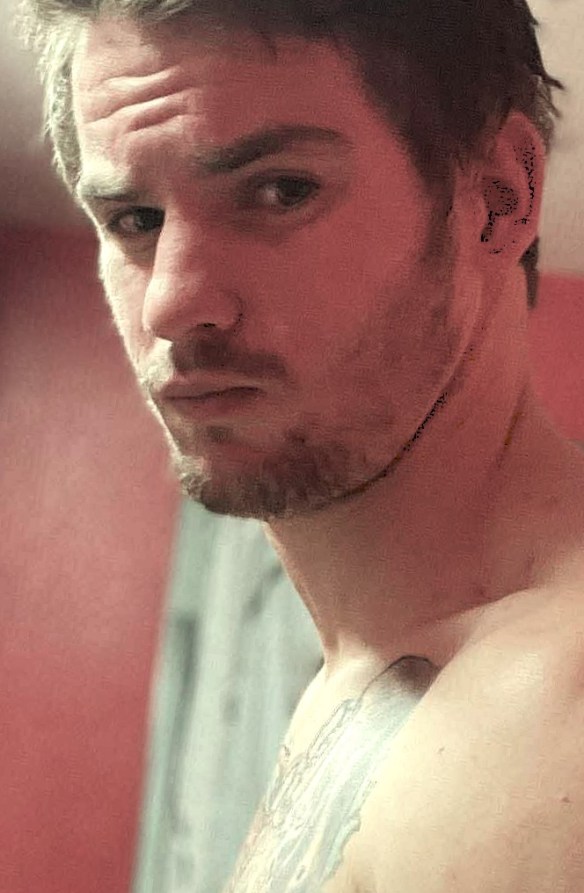
    A mother is pleading for help after her adult son disappeared under suspicious circumstances last summer, with no contact since July 31, 2024. Stephanie Sanders, who resides in Oklahoma, says her son, 28-year-old Dylan Hollingsworth, last reached out via text message from somewhere in Los Angeles.

    According to Stephanie, Dylan told her he was relocating to Colorado with a woman he had recently met. During that final exchange, he also mentioned a disturbing detail about a man he had a confrontation with at a local gym in Los Angeles and allegedly was seeking revenge.

    “Dylan moved around a lot, so I don’t have a permanent address for him,” Stephanie said. “But he never missed a holiday. When the holidays came and went with no word from him, I knew something was very wrong.”

    Since the last text message in July, Dylan has not been active on social media, and his phone service is no longer active. Stephanie, who works 50 to 60 hours a week, has tried to search through missing persons pages but says the trail from Los Angeles to Colorado is too broad without more specific information.

    No official missing person report appears filed to date, and no authorities are actively searching for Dylan.

    “I have no names, no address, nothing. Just that last message,” Stephanie said.

    Stephanie hopes that by sharing her son’s story publicly, someone who may have seen or interacted with Dylan will come forward. She describes him as kind, often restless, but never the type to vanish without a word.

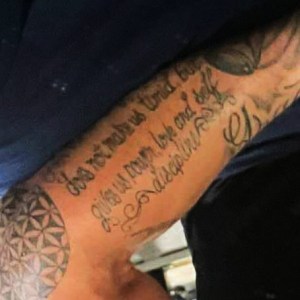
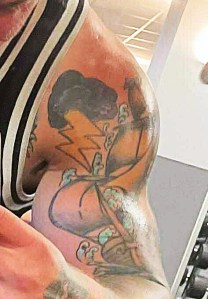
    Dylan is caucasian, with brown eyes and hair. He stands 6 foot one inch tall and has several tattoos, including one on his right forearm which reads, “For the Spirit God gave us does not make us timid, but gives us power, love and self-discipline,” and a sailship and lightning bolt in yellow on his left shoulder and bicep.

    Anyone with information is encouraged to contact their local authorities, missing persons organizations, or 702-324-2131.

  • Prince of Pareidolia

    Time is running out, and my mind is slipping more these days—or so it seems. I used to brush it off as age or poor sleep, maybe both, but lately, the line between what’s real and imagined has grown faint and slippery, like a soap bar in a hot shower.

    After work this morning, I was in aisle 17 of the home improvement box store, eye-balling hollow-core bathroom doors. I picked one that looked close enough—the same size and basic white—and wrestled it onto a cart that seemed determined to veer left no matter what I did.

    On my way to the register, I stopped at the lighting section and squinted through a shelf of bulbs, trying to decipher the difference between lumens and watts like I was back in high school algebra. Eventually, I grabbed a soft glow bulb that promised “warmth and clarity,” which sounded like what our bathroom needed.

    Our nightly routine is like clockwork and the ticking of the old wall clock in the hallway. The bathroom night light goes on at dusk and stays on until morning.

    My night vision isn’t what it used to be, and the light helps me navigate those late-night trips to the porcelain throne without incident. Or rather, it usually does.

    But last night, the light was out. Not flickering. Not dim. Just–gone.

    Grumbling under my breath, I shuffled through the darkness toward the bathroom, guiding myself with muscle memory and hope. After finishing my business—thankfully without incident, as far as I could tell—I turned toward the sink to wash my hands. The moonlight slipping through the small window cast long shadows, but nothing helpful.

    That’s when I saw the face.

    It hovered just behind my reflection in the mirror. Pale, round, expressionless. Watching me. Silent.

    I didn’t think. I reacted.

    With a grunt and a spin, I launched a textbook right elbow, one I used to win bar fights in the Marine Corps and break drywall in my younger years. The face met my elbow, and we crashed backward through the bathroom door.

    Rolling, I came up crouching, expecting a further attack. The thud brought my wife upright from sleep.

    “What the HELL, Tom?” Mary shouted, snapping the bedside lamp on.

    There, half-straddled over what was her work shirt hanging from the back of the door, I blinked up at her in confusion. The “face” was a crumpled logo on a polo shirt.

    “No face, no one,” I mumbled, still catching my breath. “Just…just a friggin’ shirt.”

    “Jeez,” she muttered, inspecting the shirt. “You practically destroyed it.”

    “At least clothes don’t bruise,” I said, trying for a joke.

    “That one does,” she snapped. “And now I have nothing to wear that doesn’t make me look like I’ve been in a bar brawl.”

    True to her word, Mary didn’t wear the shirt that day. Opting instead for something lighter, she said. Less battered. Less dramatic. But she hung the replacement up all the same.

    “That one,” she said, kissing me on the cheek before we headed out the door, “you’re not allowed to fight with. Promise me.”

    “I’ll try,” I told her, chuckling. “But if it gives me a dirty look again, all bets are off.”

    Rubbing my elbow, I looked at her shirt hanging from the living room closet door and could almost laugh now.

    Almost.

  • Chasing Flecks

    Yesterday, day three, 1:49 p.m.–and the Nevada sun beat down like it wanted me gone. My claim–twenty feet of dry, cracked earth–lay baking in the late Spring heat, marked by four crooked rock cairns and misplaced confidence.

    There, I leaned on my camp shovel, panting, sweat stinging my eyes and grit in my teeth. Every muscle in my back ached, my jeans were stiff with dust, and my water jug was sweating more than I was.

    I’m a dreamer, maybe an idiot. It depends on who you ask.

    I found the spot a week ago, wandering farther than I meant. I wasn’t looking for anything particular–just trying to clear my head.

    That’s when I saw an old dry wash twisting through the brush, maybe four feet wide in places, choked with rounded stones and rust-colored gravel. The kind of cut that comes from water–fast-moving and heavy at some point in the past.

    The sides had scalloped from old floods, with layers of sediment packed tight. High up along the bank, I spotted what looked like black sand trapped between slabs of fractured bedrock–nothing major, but enough to make me stop. A few pieces of quartz, too–white veins spidering through brown rock–and one chunk with a yellow stain I couldn’t quite explain.

    There were no footprints, no trash, no claim markers. Just a quiet, weathered cut in the earth that hadn’t seen human hands in who knows how long.

    It’s what got me.

    It wasn’t the color or the shape of the rocks–it was the feel of the place. The way the old streambed twisted off the ridge like it was trying to hide something.

    The old timers say, “Where water slows, gold goes.”

    Crouching, I scooped up a handful of dirt. The wash had all the signs–a couple of tight bends, an inside curve where floodwaters might have dropped their load, and even a slight natural riffle formed by rock clusters near the bend.

    It wasn’t proof, not by a long shot, but it was enough. Enough to believe. Enough to stake a claim, dig in, and see if that little whisper of instinct was right.

    Three days into my fool’s errand, I’d scraped together about one-sixteenth of an ounce of gold, not worth justifying the blisters on my palms. I wiped my face and stared at the stubborn third boulder I’d been trying to move.

    “You win again,” I muttered, giving it a half-hearted kick.

    It didn’t budge–instead, it sat there like it was laughing at me.

    Dry panning is less a method and more a test of patience–maybe faith. There’s no creek here, no water at all.

    Just me, a battered green pan, and dirt. Lots and lots of dirt.

    I knelt, scooped a handful of sand, gravel, and powdery silt into the pan, and began to swirl. I tried to mimic the movement of water, just like I’d seen in those old prospector videos late at night when I should’ve been sleeping.

    Tilt, swirl, tap, let the lighter sediment spill over the side while the heavier stuff—hopefully gold—settles. I’d done it hundreds of times now.

    My fingers were cramped, my breath shallow. Time and again, I tapped the pan’s edge, coaxing any shimmer to reveal itself.

    “Come on,” I whispered. “Just one more flake.”

    It felt ridiculous, standing alone in a forgotten wash, begging dirt to turn into dreams. But here I was, dust in my hair, sunburn on my neck, and more hope than sense.

    Sam Clemens’ voice echoed, “A mine’s a hole in the ground owned by a liar.”

    “Yeah,” I muttered, “but at least I’m an honest liar.”

    Gently, I blew across the surface, a trick I’d picked up online through YouTube. It’s supposed to lift the lighter dust and leave behind anything with weight. Most times, all that happened was dirt–blown back into my face.

    The pan was no different—until a glint caught my eye. Tiny. Barely there. But it gleamed like a wink from the earth itself.

    “Gotcha,” I said, grinning as I dropped the one lousy speck into my little glass vial.

    As I packed up my truck, I remembered Sam’s final words about digging in the earth, “Mining’s a fool’s game. Hard, hot, and you’ll starve one way or another.”

  • Outsmarting a Fur Missile, Barely

    So picture this–I’m out doing my DHL rounds, walking up to this house with a package in hand–when I hear the growl. Not just any growl. It was the kind of deep, soul-rattling sound that says, “I have waited my entire life to bite someone in a uniform.”

    I glance to my right, and there he is—a dog wedged behind a wooden fence, nose jammed through the slats like a fuzzy little battering ram. His lips are pulled back in full snarl mode, flashing every one of his suspiciously well-maintained teeth like he just left the vet and wasn’t happy about it.

    Now, I don’t usually back down from a fight, especially not one issued by a pint-sized fur missile with a Napoleon complex. So I reached into my pocket, pulled out a dog treat–standard issue for moments like these– and slid it through the fence like I was handling a live grenade. Smooth, calculated, diplomatic.

    You’d think that’d settle things. It didn’t.

    He snatched the treat with a growl that got even louder, then locked eyes with me–chewing it slowly like I was supposed to feel bad about existing. Message received.

    So, I gently set the package down, backed away like I was leaving a bear cave, and said, “You win this round, buddy.”

    I’m pretty sure he’s still mad at me for being born.